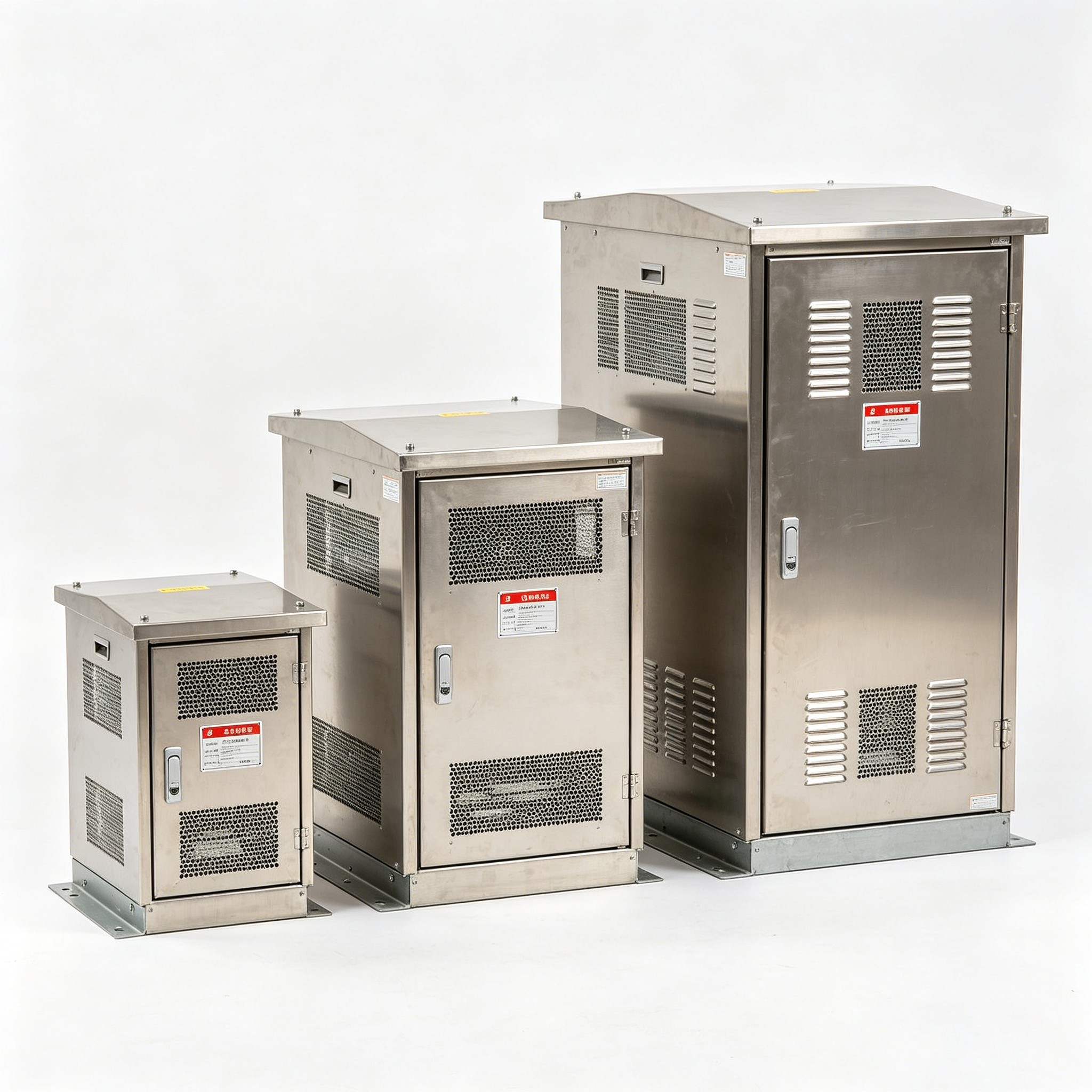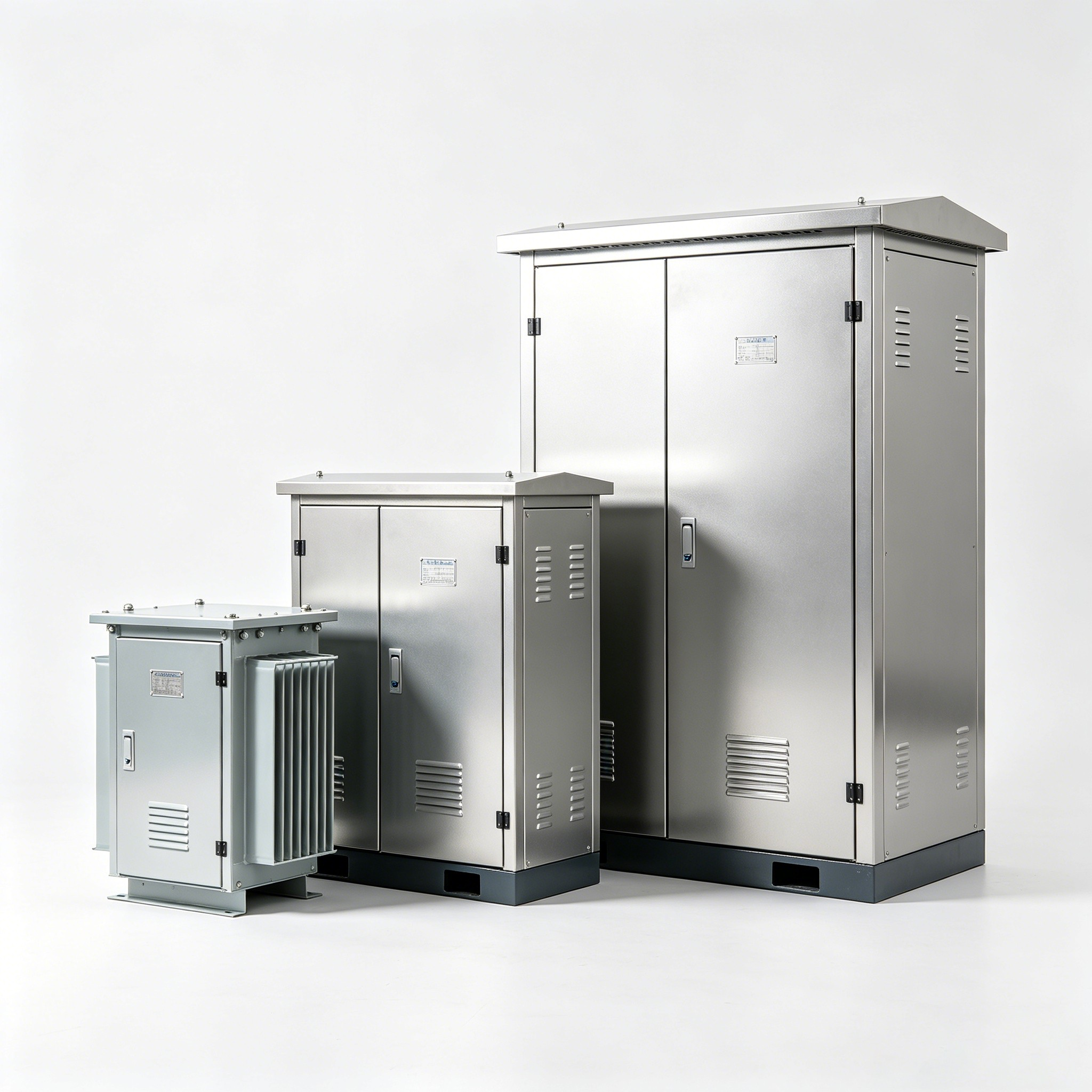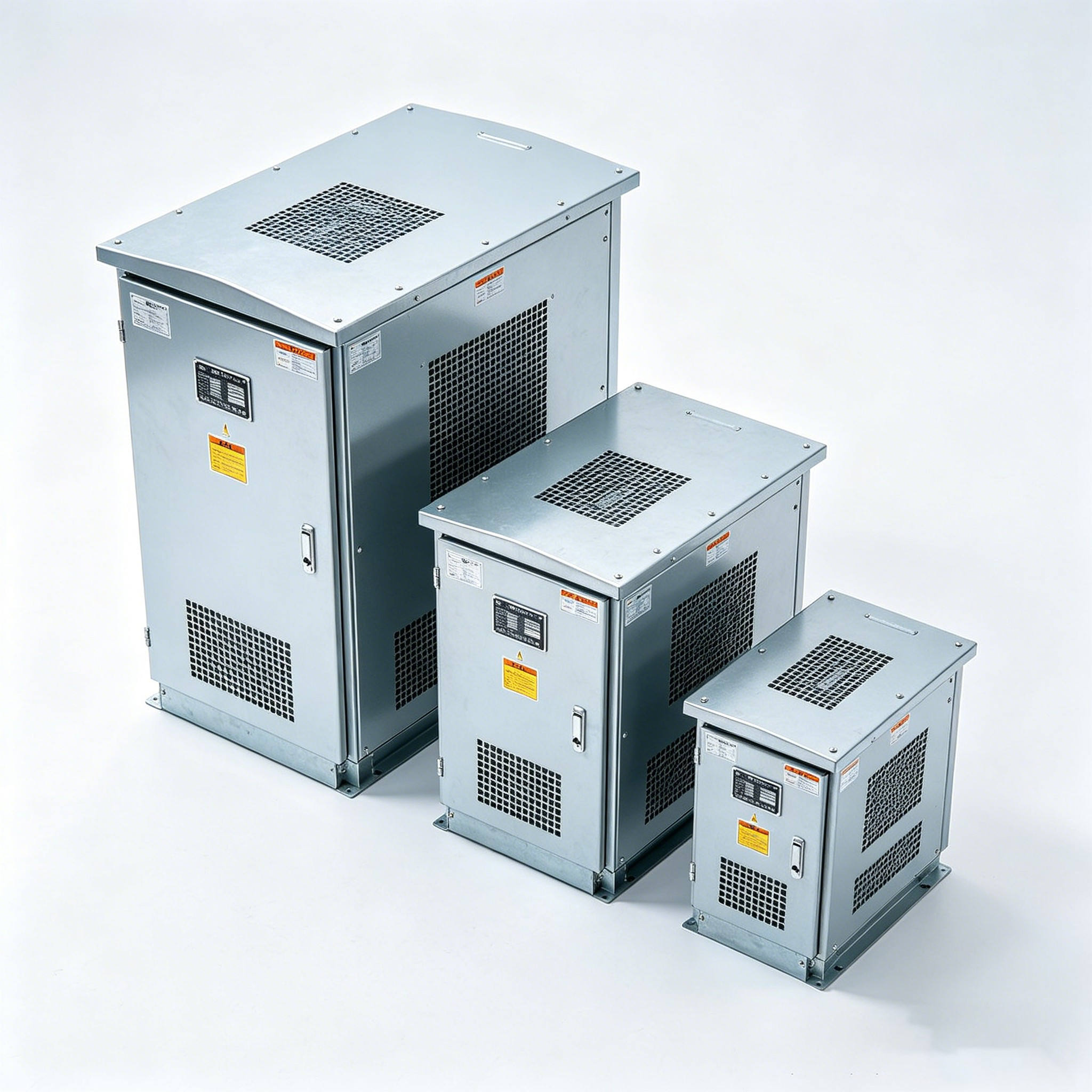

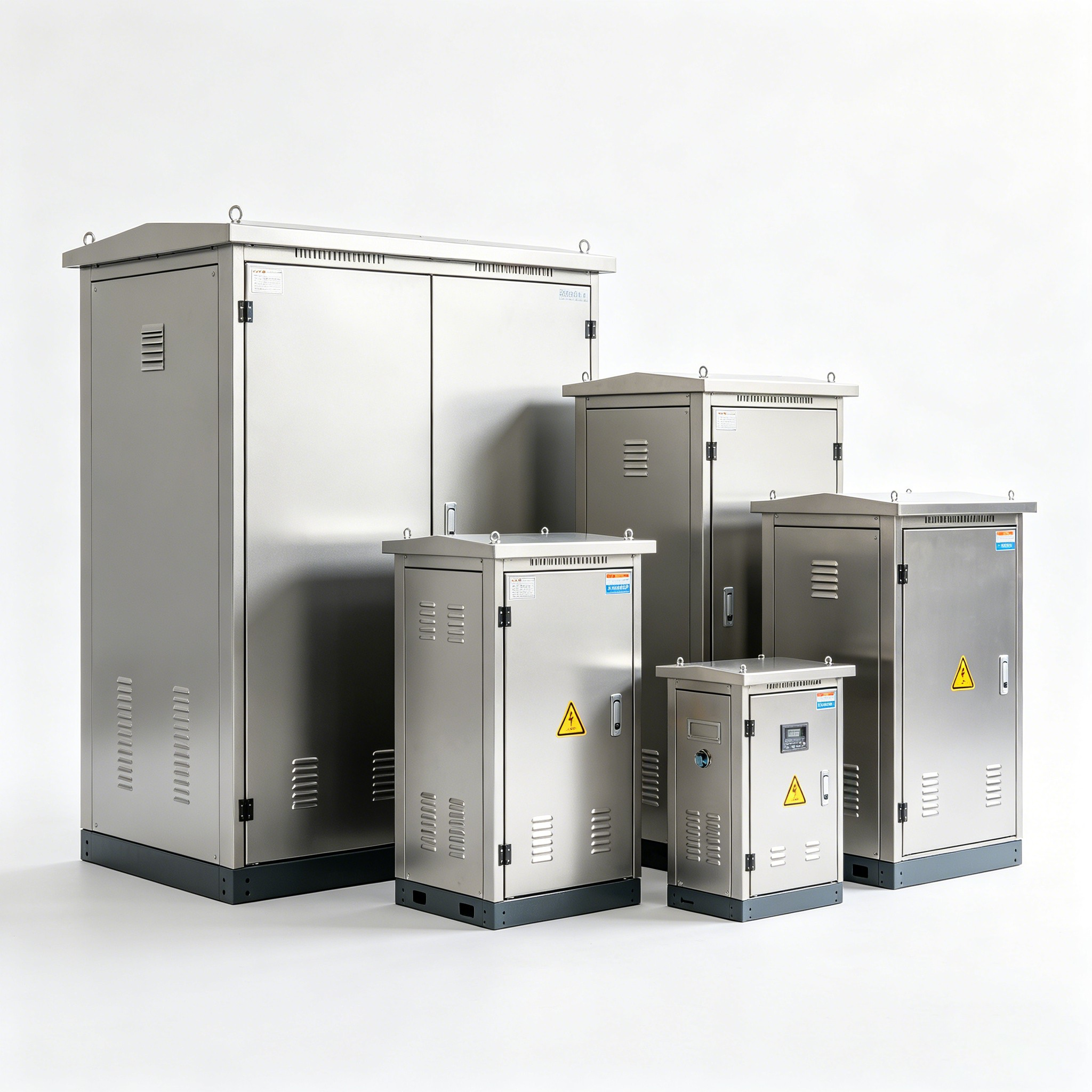
A pad-mounted transformer is an integrated pre-fabricated power distribution unit that incorporates a transformer, high-voltage switchgear, low-voltage switchgear, distribution devices, and auxiliary components into a standard sealed enclosure. It is a commonly used integrated power distribution device in power transmission and distribution systems, suitable for various outdoor and easy-installation scenarios.
I. Core Structure
- Enclosure: Made of cold-rolled steel or aluminum alloy, featuring sealing, dustproof, rainproof, and anti-corrosion properties. It can withstand harsh outdoor environments and protect internal equipment.
- Transformer Core: Depending on the application requirements, it can be configured with oil-immersed, dry-type, or amorphous alloy transformers to achieve voltage conversion and meet different distribution needs.
- High and Low Voltage Distribution Devices: Integrates high-voltage circuit breakers, low-voltage circuit breakers, fuses, instrument transformers, and other components to enable power distribution, control, and protection.
- Auxiliary Systems: Equipped with ventilation and heat dissipation devices, lighting devices, grounding devices, etc. Some units can be fitted with intelligent monitoring components upon request to provide equipment operating status feedback.
- Cable Terminals: Pre-wired standardized connection interfaces are provided for quick on-site cable termination and installation, improving construction efficiency.
II. Working Principle
Based on the principle of electromagnetic induction, the transformer core inside the enclosure converts the input high-voltage electrical energy into low-voltage electrical energy suitable for the application. This energy is then distributed and protected by the internal high and low voltage distribution devices. The ventilation and heat dissipation system within the enclosure removes the heat generated during equipment operation, ensuring all components operate stably within a reasonable temperature range. Overall, the system achieves the conversion, distribution, and safe transmission of electrical energy.
III. Key Features
- Advantages: High level of integration, combining multiple distribution devices into one unit with a moderate size and small footprint. Easy to install, requiring no separate construction of a distribution room; on-site lifting and placement are sufficient for installation and commissioning. Good sealing performance, suitable for complex environments like outdoors and construction sites. Simple operation and maintenance procedures with low post-installation maintenance workload. Intelligent monitoring functions can be configured as needed.
- Precautions: The sealing performance of the enclosure should be inspected periodically to prevent rain and dust from entering and damaging the equipment. For outdoor installation, choose a location with higher ground elevation and good drainage to avoid water accumulation. Regularly inspect the internal cooling system and cable terminals to ensure normal equipment operation.
IV. Common Classifications
- By Transformer Type: Oil-immersed pad-mounted transformer, dry-type pad-mounted transformer, amorphous alloy pad-mounted transformer, catering to different environmental and fire safety requirements.
- By Application Scenario: Outdoor pad-mounted transformer, indoor pad-mounted transformer, photovoltaic-specific pad-mounted transformer, industrial and mining-specific pad-mounted transformer, etc.
- By Capacity Rating: Small pad-mounted transformer (tens of kVA), medium pad-mounted transformer (hundreds of kVA), large pad-mounted transformer (thousands of kVA), covering different power distribution scale requirements.
V. Application Scenarios
Suitable for outdoor power distribution, urban and rural distribution network upgrades, residential community power distribution, industrial and commercial park power distribution, photovoltaic power stations, wind power stations, temporary power distribution at construction sites, and other scenarios. It is particularly ideal for applications with limited space, requiring rapid installation, and where building a dedicated distribution room is not necessary.
Phone: 4000-828-500
Email:kefu@wstx.com.cn
Fax:0616-83723555
Address: 6th Floor, Building C-2-B, Xuzhou Software Park, Quanshan District, Xuzhou City, Jiangsu Province, China