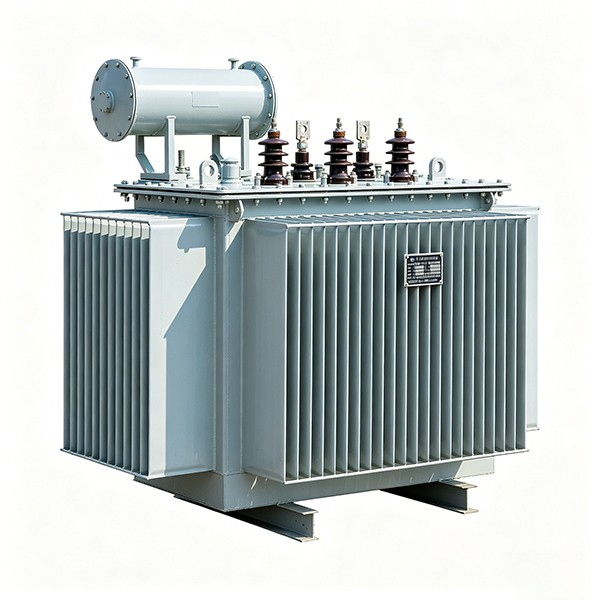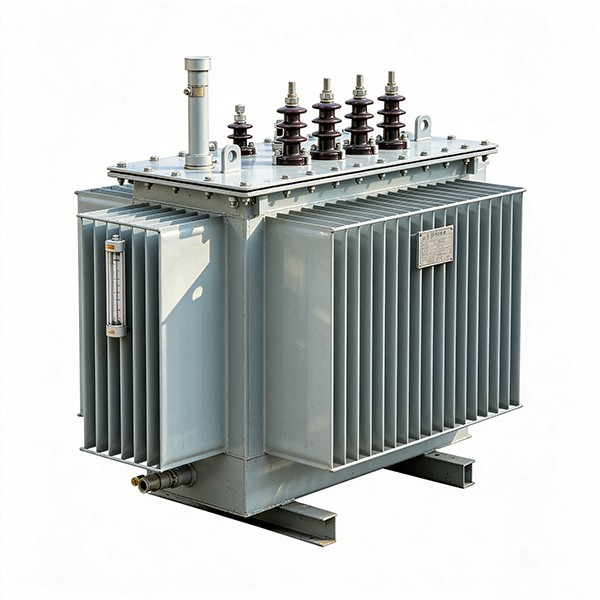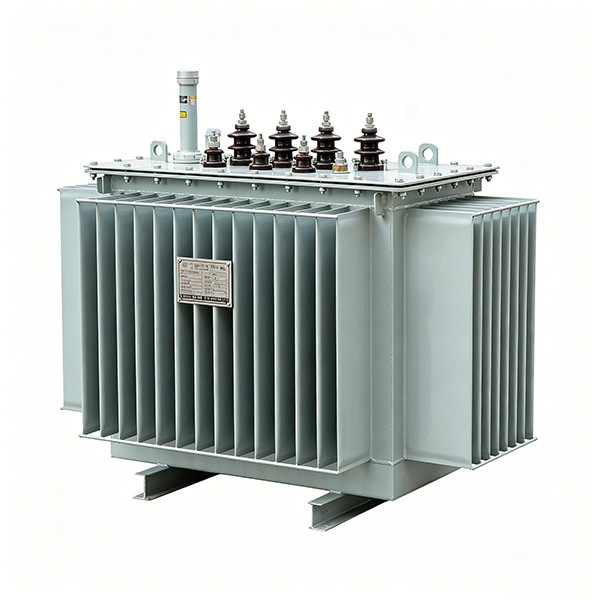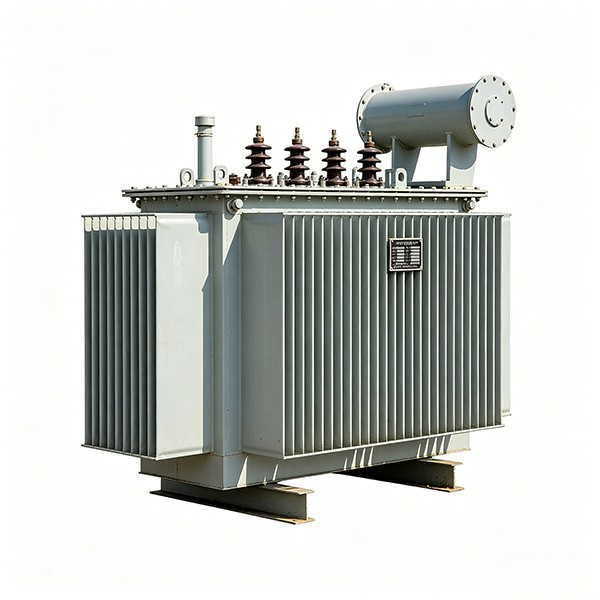

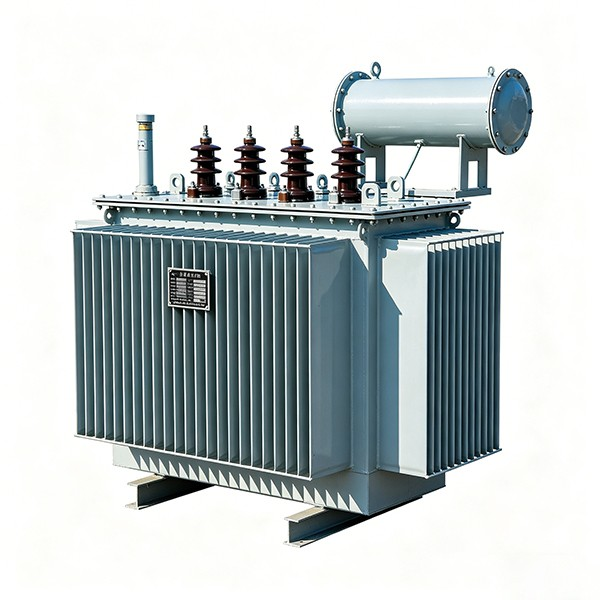
An oil-immersed transformer is a power transformer in which the core and windings are immersed in a sealed oil tank, using insulating oil as the insulation and cooling medium. It is a widely used and technically mature core equipment in power transmission and distribution systems.
I. Core Structure
- Core: Made of laminated high-permeability grain-oriented silicon steel sheets, forming a closed magnetic circuit to effectively reduce operating losses.
- Windings: Wound with copper or aluminum conductors, divided into high-voltage and low-voltage windings, primarily serving the function of voltage transformation.
- Insulating Oil: Typically mineral oil or synthetic ester oil, performing three main functions: insulation, heat dissipation, and arc quenching.
- Tank and Cooling: Utilizes a sealed steel tank equipped with corrugated fins or radiators; large-capacity units may be paired with a forced oil circulation air cooling system to ensure effective heat dissipation.
- Protective Accessories: Include a conservator (oil expansion tank), breather, Buchholz relay, pressure relief valve, and insulating bushings, ensuring safe equipment operation.
II. Working Principle
Based on the principle of electromagnetic induction: When an alternating current is applied to the primary winding, it generates an alternating magnetic flux. This flux is coupled through the core to the secondary winding, inducing electrical energy at different voltage levels, thereby achieving voltage step-up or step-down. The insulating oil removes heat generated during operation through convection while isolating high-voltage components to ensure insulation safety.
III. Key Features
- Advantages: Good dielectric strength, strong heat dissipation capability, wide capacity range (from tens of kVA to hundreds of MVA), moderate cost, reliable operational stability, long service life (typically 20–30 years), and suitability for outdoor operating environments.
- Precautions: The insulating oil is flammable, posing potential risks of fire and leakage pollution; regular oil quality maintenance is required during operation to ensure normal equipment performance.
IV. Common Classifications
- By Cooling Method: Oil Natural Air Natural (ONAN, suitable for small to medium capacities), Oil Natural Air Forced (ONAF), and Forced Oil Circulation Cooling (OFAF/ODAF, suitable for large capacities).
- By Application: Power transformers (for grid transmission and distribution), distribution transformers (10kV/0.4kV for end-user supply), and special oil-immersed transformers (e.g., for rectifier, furnace, and traction applications).
V. Application Scenarios
Suitable for power plants, substations, urban and rural distribution networks, industrial and mining enterprises, commercial buildings, and rail transit systems. Particularly well-suited for large-capacity, high-voltage, long-term outdoor distribution needs.
Phone: 4000-828-500
Email:kefu@wstx.com.cn
Fax:0616-83723555
Address: 6th Floor, Building C-2-B, Xuzhou Software Park, Quanshan District, Xuzhou City, Jiangsu Province, China